BALLINIPITT » Projects » Architecture » Office » CFL Dernier Sol
CFL Dernier Sol
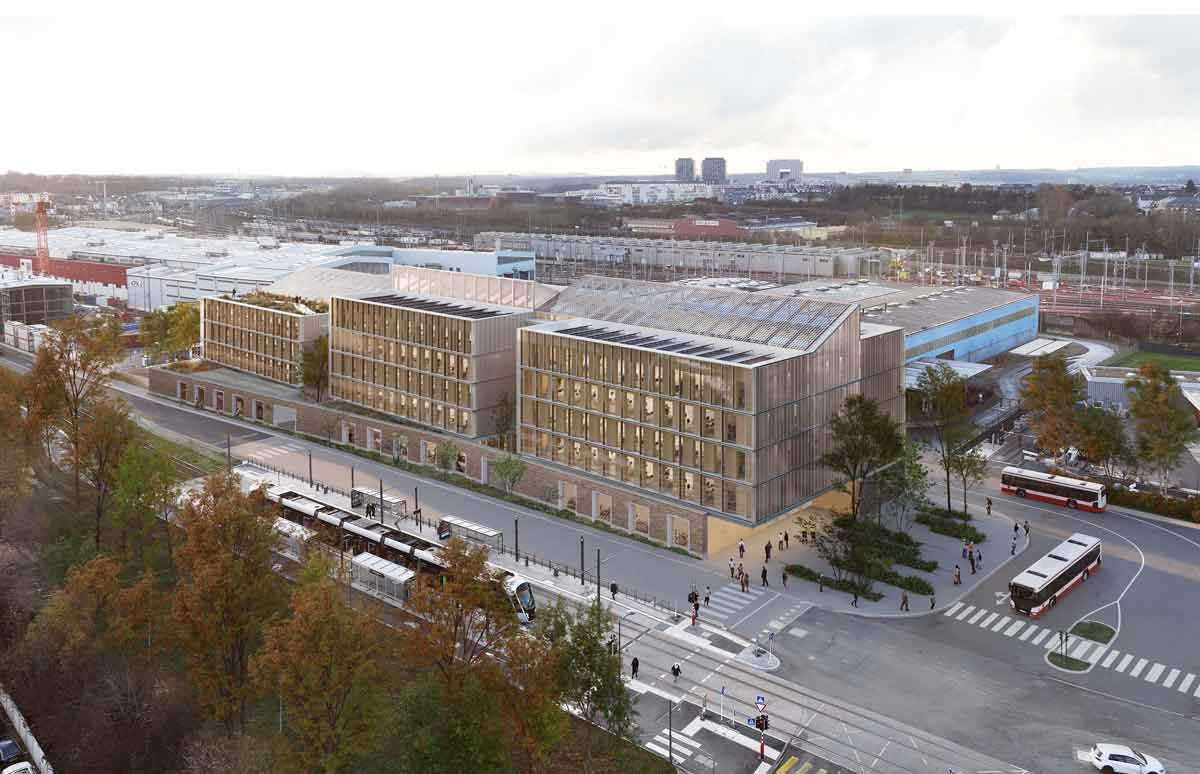
CFL organized a competition for the design and construction of a new administrative building on a plot of land in the heart of the new Dernier Sol district in Luxembourg. This building will house the Infrastructure Maintenance Department and consolidate various site requirements (bus, train, equipment).
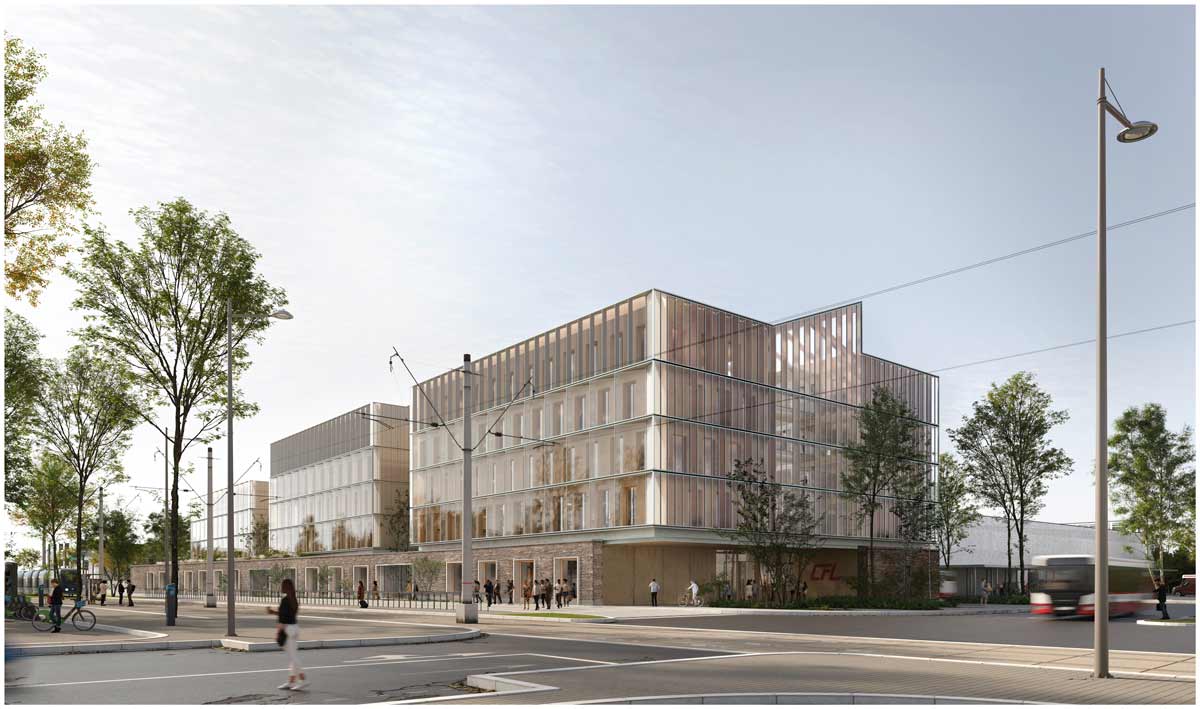
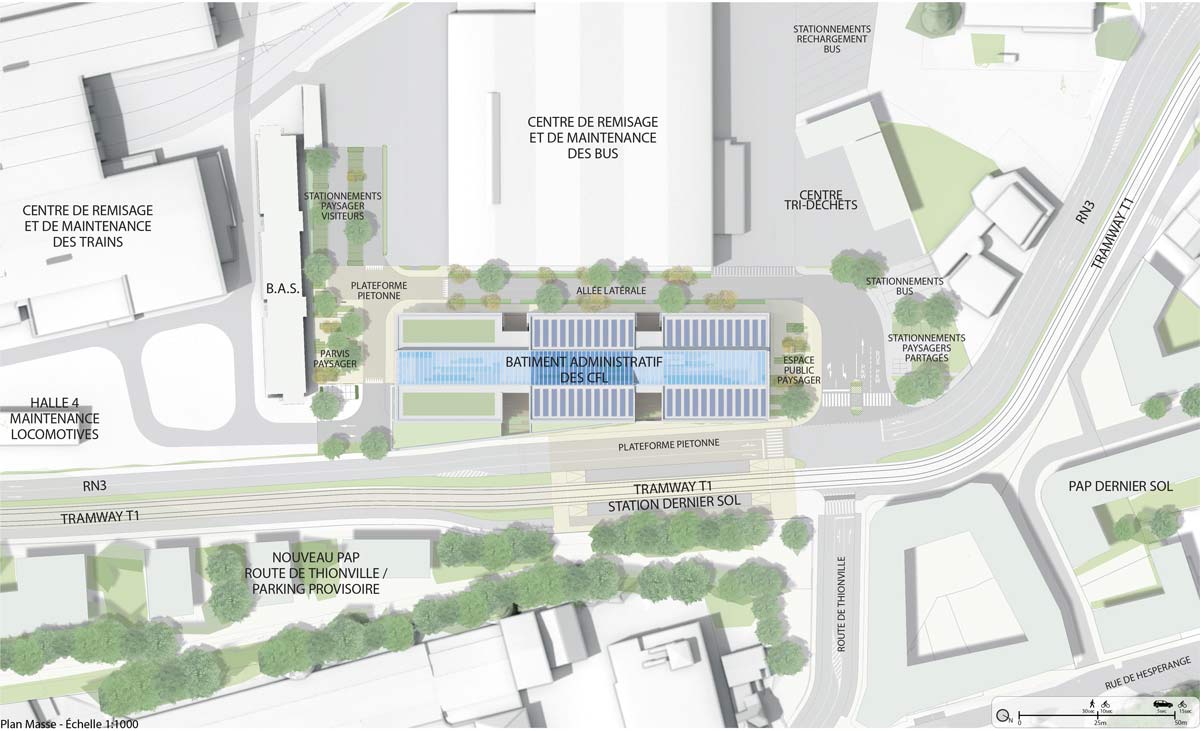
During the design phase, we not only draw on the industrial identity of the context, but also anticipate the transformation of the neighborhood. The construction of the new CFL building will contribute to the renewal of this urban fringe by creating an urban frontage on Kyiv Boulevard, while respecting the mixed character of the neighborhood. The arrival of the tramway has already profoundly changed the neighborhood, placing the site just 5 minutes from the main railway station and 10 minutes from the city center.
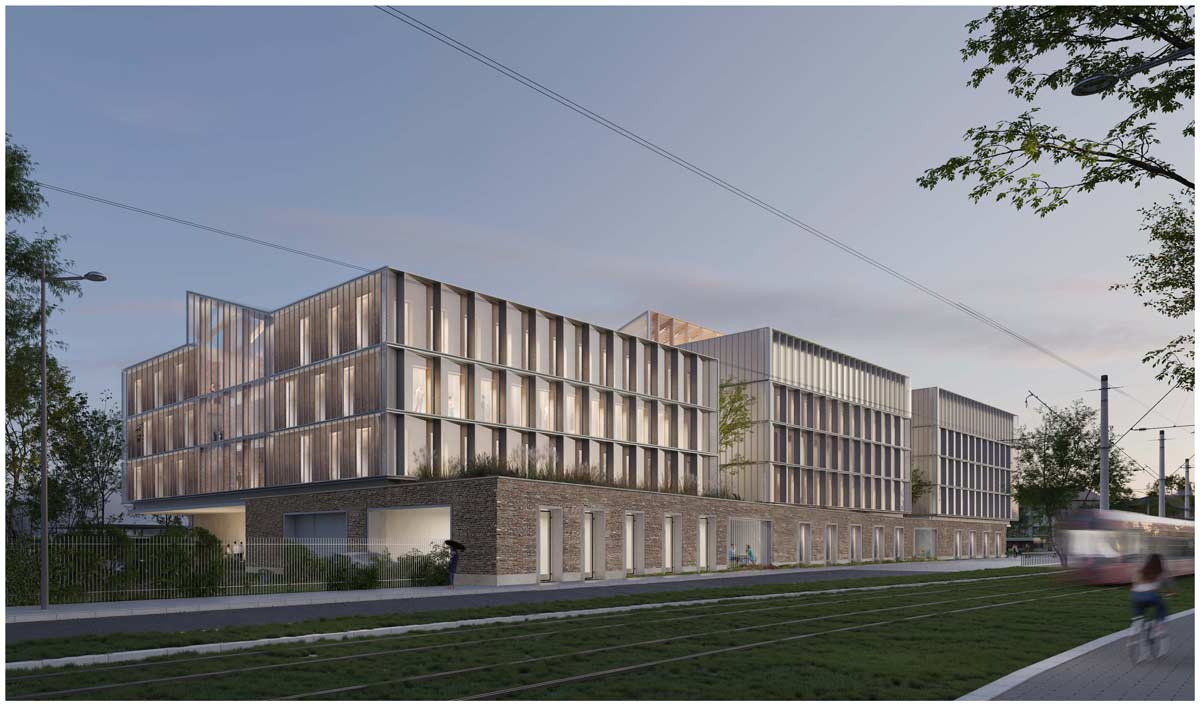
We propose a building that integrates into the existing industrial environment and initiates the transition to a new urbanity. The massing is simple and immediately legible, with prismatic blocks whose height decreases on the peripheral side, accompanying the exit from the city. The architectural expression is defined by the contrast between the industrial language of the gables and the warmer vocabulary of the double façades, with wood in the background.
We place living beings at the heart of our project. We paid particular attention to reducing the extent of impermeable surfaces and increasing the number of trees on the site. This natural environment extends to the edge of the avenue’s sidewalks.
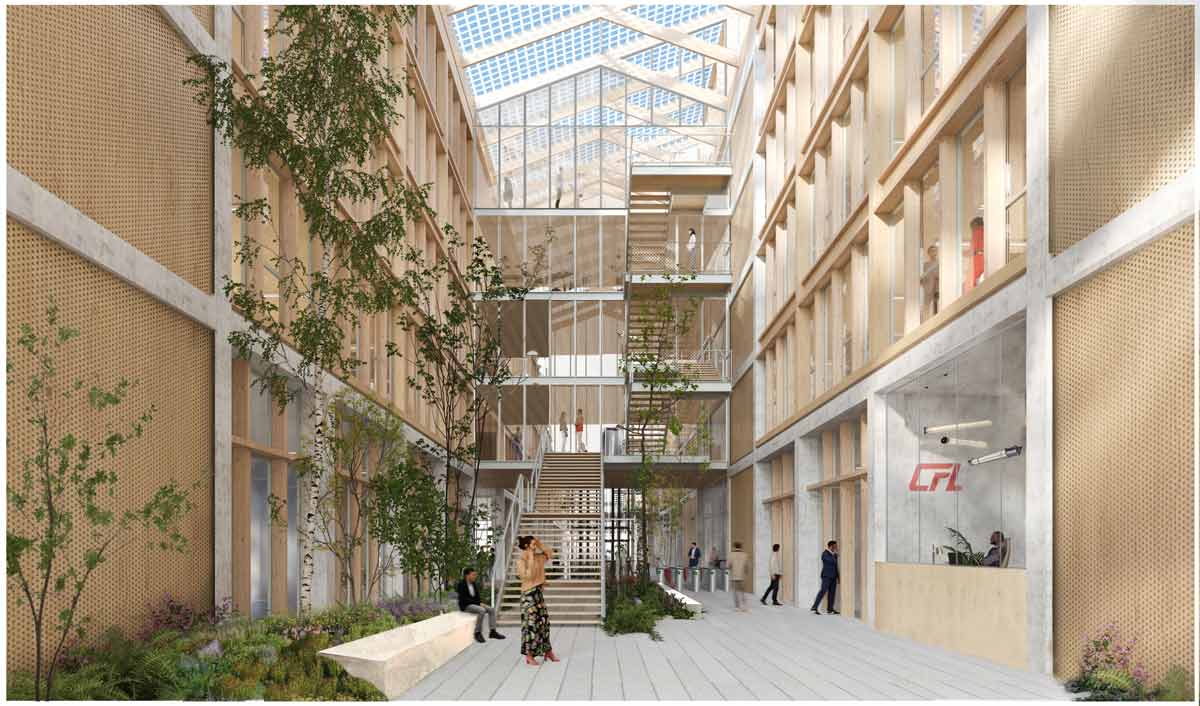
The various program elements are organized on either side of a central hall, a true place for living and sharing. It creates a meeting point in a light-filled, thermally comfortable space: a sheltered, shared area on the scale of an interior street.
Footbridges on all floors connect the different buildings. Far more than circulation areas, they are places for living and sharing, with spaces for informal work and relaxation.
With the large hall, occupants have access to semi-outdoor, thermally comfortable spaces, enabling them to work on the move. The vertical circulation unfolding within its volume encourages daily encounters. We adopt functional, technical, and architectural approaches based on rationality and durability.
Given the particularly dense urban environment (railways, roads, and air routes), acoustics are one of the project’s major challenges. The project limits external noise thanks to high-performance façades incorporating a double-skin assembly to meet the targeted acoustic requirements (BREEAM Excellent + WELL Platinum). Appropriate interior acoustic comfort (absorption and insulation) will be provided by coffered slabs with absorbent undersides, with occasional reinforcements on vertical walls along the interior street.
Indoor and outdoor gardens soften the building’s boundaries and create a public space within the large hall. Extending up to the roof terraces, the gardens invite users to work differently and also provide areas for relaxation. Our ways of working have changed, and the construction industry must be able to respond to these new needs.
The offices on either side of the shared corridors offer the same spatial quality, but each has its own circulation system, making them independent. Each of the six modules can be combined or separated to suit occupants, or even the days of the week or the seasons. This will allow the balance between CFL offices and leased offices to evolve and adapt to changing needs. The floors are designed without suspended ceilings and with a structure that allows for different layout possibilities. The project also includes a sprinkler system and has been designed to accommodate open-plan or landscaped office layouts.
The rigorous 5.40 m grid makes it possible to create single, double, or multiple offices depending on requirements, enabling a combination of collaborative workspaces and creative workshops, as well as moments of individual concentration and more confidential activities. This framework can also be adapted to other concepts.
Designed with timber columns and slabs, the obstruction-free structure offers maximum flexibility and scalability. In this way, the building can accommodate transformations and, over the long term, potential changes of use without extensive works that would compromise its architectural identity.
- Client: CFL
- Location: Luxembourg-Dernier Sol, Luxembourg
- Surface area (SCB): 15,000 m² above ground + 11,500 m² underground (parking lot)
- Volume (VB): 60,000 m³ above ground + 36,000 m³ below ground
- Typology: Office
- Energy class: A
- Certification: BREEAM (Excellent), WELL (Platinum)
- Design: 2022
- Work schedule:
- Stage(s): Competition
- Team: Elia Canadell-Navarro, Claude Ballini, Artur Michalak, Eric Pigat
- Associate architect: Groupe AREP
- Other projects Office